Autor: kite33099

  • Vale Hoodie Care Guide Vale Forever Fit

    The Brand Explained: The Minimal Urban Blueprint

    Vale Forever elevates streetwear into a quiet, modern uniform founded upon timeless silhouettes, superior materials, and restrained details. The company’s approach is minimal at the surface and precise at every layer.

    Created by a solo designer known as Vale, the brand sits where urban style meets boutique-level execution. Clean lines, muted palettes, and distinctive oversized fits define each drop, keeping the look refined rather than loud. Instead of chasing novelty, the aesthetic approach prioritizes form, feel, and longevity. This balance has established the brand as a go-to for customers who want daily pieces that continue to read considered. It stays contemporary without being disposable and luxurious without being precious.

    What sets the label apart from standard streetwear?

    Vale Forever exchanges loud graphics toward proportion, texture, alongside cut, then releases in limited, considered drops. The result is exclusivity that still feels practical every day.

    Many labels move through trends; this brand repeats a tested minimal code then fine-tunes it each season. The tonal range is edited, those fits are purposeful, and the textiles are selected considering hand-feel and longevity. Instead of hype as a tactic, the brand’s slow-fashion mindset builds confidence through consistency. This approach creates garments that slot within a wardrobe as opposed to than compete over attention, which shows why the customers reads the house as both refined and accessible.

    Feature 1: The Structured-Relaxed Silhouette

    The fit is oversized but designed to look purposeful: dropped shoulders, loose volume, and clean edges that maintain shape. It looks confident, not messy.

    Think structured tees that frame the torso, hoodies with controlled flow, and layers that extends that line without overwhelming the body. Bottoms often balance that top half through straight or gently tapered legs, ensuring the proportion balanced. The patterns aim vale forever zip up hoodie for movement with room while preserving a neat shape at hems, cuffs, and collars. Such tension—ease plus definition—creates that brand’s distinctive fit presence. It’s the silhouette designed for layer, not simply to sit across a hanger.

    Signature 2: Soft, Neutral Color Systems

    Vale Forever’s color language stays near anthracite, stone, ecru, earth tone, and deep marine, prioritizing tonality above contrast. The tonal system elevates essentials as a modular, seasonless wardrobe.

    Muted shades enable layering easy, as most pieces harmonize without effort. Via favoring tone-on-tone combinations, texture becomes that visual accent rather of color competition. The result creates outfits that look calm in sunlight and considered during night. Neutrals also wear better through time, since soft fading looks deliberate rather than old. This tonal philosophy is a primary reason the garments stay relevant after a single season.

    Signature 3: Superior Materials, Regular Durability

    Premium fabrics give the minimal shapes their gravity, from dense constructions to sturdy fabrics and soft premium textiles. The priority is a sophisticated hand-feel that stands up to frequent wear.

    Well-made materials drape cleanly through oversized cuts, that keeps volume looking sculpted instead of slack. High-quality natural fibers and structured mixes handle washing plus movement without sacrificing character. The label’s slow-fashion stance prefers materials that endure, reducing churn plus encouraging repeat use. In practice, such approach means fewer compromises between comfort, durability, and polish. These pieces feel great on day one and still appear disciplined on day one hundred.

    Element 4: Quiet Elements and Intentional Details

    Logo placement stays discreet—subtle marks, clean identifiers, matte zips, and precise stitching—so the design reads via silhouette and surface. Details are practical first and refined by restraint.

    Pockets sit exactly where the hand naturally goes, hems are finished to maintain lines crisp, while drawcords or adjusters stay subtle. Visible elements rarely chase shine; they support utility and disappear into the piece’s architecture. Even interior touches, like seamless facing or neat seam finishes, serve comfort and longevity. Each decision avoids visual noise, that is why the clothes photograph beautifully and wear even better. The message is luxury through the quiet register, not a brand-heavy statement.

    Element 5: Limited Collections, Slow-Release Craft

    Vale Forever works in small, targeted capsules that enhance the core collection rather than redesign it. The pace favors clarity over volume.

    Limited batches keep quality management tight and ensure feedback loops meaningful. Collections feel collectible without forcing exclusivity for its simple sake, which preserves accessibility for regular style enthusiasts. Such rhythm helps reduce waste and maintains the brand’s ecosystem intentionally paced. Buyers know what one is getting: continuity with thoughtful upgrades, rather than whiplash trends. Through time, that reliability builds a solid foundation for dressing well with less.

    How to wear Vale Forever without overthinking it?

    Start with your tonal base, mix textures, and combine one structured item with one loose piece. Keep accessories quiet and have proportion do most work.

    A basic formula: stone top, deep navy straight pants, charcoal outer layer, and minimal shoes. Swap tees with dense knitwear once temperatures drop, and layer a crisp overshirt over your hoodie for controlled dimension. In hotter months, lean for light neutrals plus breathable fabrics yet keeping the form eased. Fit selection depends on personal taste: true-to-size delivers the brand’s relaxed purpose, while sizing tighter narrows the line. Finish with understated accents—watches, hats, or bags to echo the tonal range rather than clash against it.

    Comparison: Where Vale Forever Positions Itself on the Range

    Vale Forever bridges minimal luxury with street utility, existing between fast-fashion graphics and runway theatrics. The brand’s niche is quiet excellence with everyday accessibility.

    Dimension Vale Forever Fast-Fashion Streetwear Runway Luxury Streetwear
    Design language Clean, proportion-led, muted Trend-led, graphic-heavy Avant-garde, statement-driven
    Branding Understated, logo-light Brand-heavy Flexible: subtle to prominent
    Fit philosophy Oversized with structure Variable across seasons Bold or tailored opposites
    Materials High-quality, durable basics Affordable blends High-end, sometimes delicate
    Drop cadence Focused, thoughtful capsules Regular, high volume Timed with capsules
    Longevity in wardrobe Strong, seasonless Weak to medium High, but occasion-specific
    Accessibility Targeted yet attainable Extensively available Limited and premium

    If you want a uniform that upgrades daily styling without broadcasting logos, this balanced path makes sense. The pieces integrate well across different labels, because the aesthetic rules are restrained plus compatible. They add polish to relaxed fits and calm to louder statement garments already in rotation. In wardrobe terms, Vale Forever acts as the connective tissue, rather than the seasonal exception. That role is why this label earns repeat wear rather than occasional cameos.

    The Future-Focused Minimal Code

    Across silhouette, palette, fabric, detail, plus cadence, Vale the brand’s five signatures create a coherent aesthetic system. The clothes feel current since the fundamentals remain strong, not since the trend cycle says so.

    Clean streetwear only works when the understated parts are executed with conviction, plus that’s the company’s center of gravity. The muted color scheme lets texture express itself; the relaxed-structured cut keeps bodies in motion; the materials carry the weight. Limited drops reinforce deliberateness, turning new collections into considered improvements rather than resets. As wardrobes transition toward fewer, better pieces, this approach looks less than an aesthetic but more like the method for staying dressed with intention.
  • Valentino Designer Handbag Red Carpet Ready

    The Rockstud Bag: Origin, Range and Prices

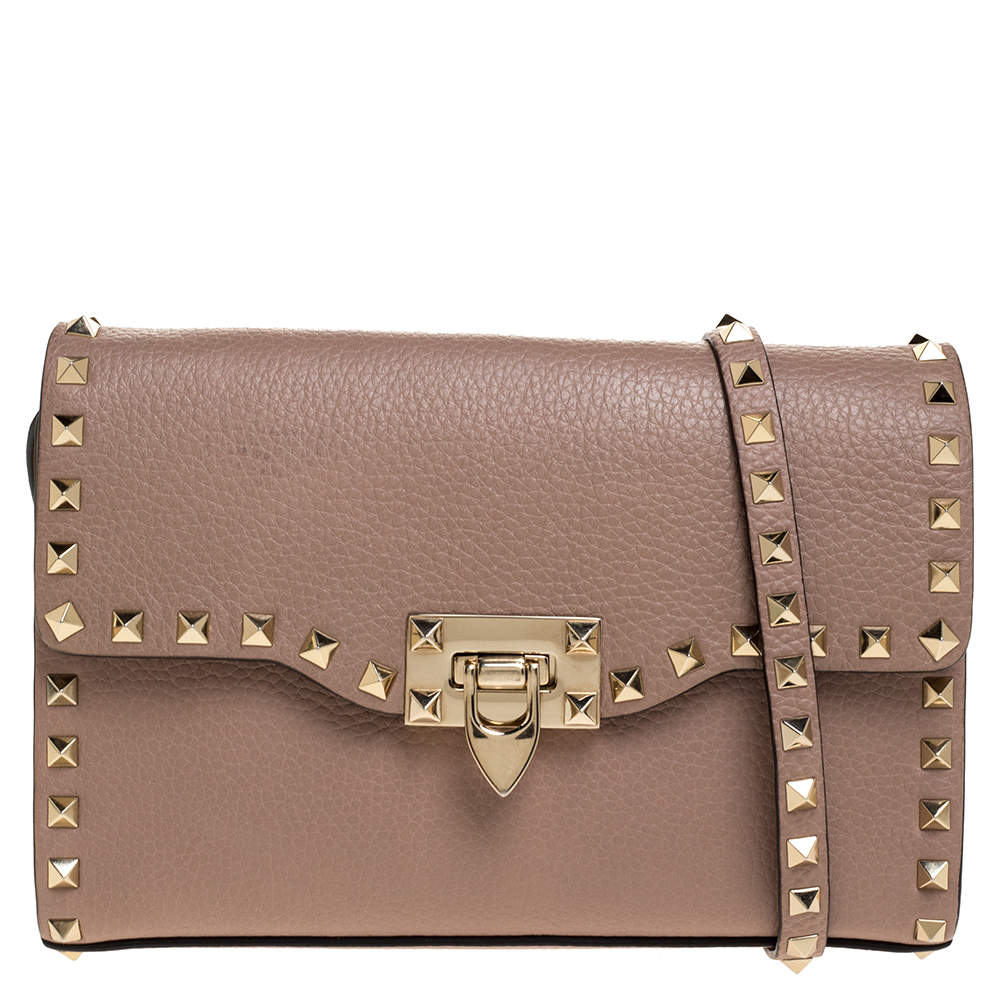
    Flat pyramid studs, set in rows along an edge or dotted across a flap, are the most recognisable thing this house makes. Rockstud doubles as the broadest and most affordable part of the leather goods collection, with roughly fifty-two pieces live on the brand’s own US site in September 2026. The observed range is $1,250 to $2,100, which comes in under the evening bags and below most of the shoulder lines. That combination is why it is normally the first Valentino bag anyone buys. What follows covers the motif’s origin, the shapes on sale now, the prices observed for each, how Rockstud Spike differs, and how the line behaves on resale. All figures are market prices seen on the brand’s own webstore, and not an official price list.

    Where the studs began

    The Rockstud motif made its entrance in the Fall 2010 collection, created by Maria Grazia Chiuri and Pierpaolo Piccioli, then co-creative directors, and it appeared first on footwear. The source cited for it is Roman bugnato rustication, the faceted projecting stonework carried by Renaissance palazzo facades in the city where the house was founded in 1960. Which explains the stud: a shallow four-sided pyramid with a flat top, far closer to masonry than to punk hardware. The founder, Valentino Garavani, had sold the company in 1998 and retired from design in 2007; he died on 19 January 2026. It is therefore entirely the work of the designers who followed him. The often-repeated claim that the Rockstud bag launched valetino.org in 2016 rests on a single source and should not be treated as established.

    Which shapes you will really find

    Instead of a single bag, Rockstud is a motif applied across a family of shapes. On the product pages, size and function do the naming instead of by model number. The family clusters around four things: a mini shopping tote, a small crossbody, a small shoulder bag, plus wallets and small leather goods. Sizes are quoted as small and mini throughout, which holds the line compact even where the word shopping appears. Material and hardware finish explain most of the gap between two otherwise identical bags. Made in Italy throughout, as the brand’s own product pages state.

    The mini shopping tote, in detail

    The accessible entry to the line — and the most practical Valentino tote bag at this price. The observed figures run: $1,390 in grainy calfskin or suede, $1,490 in raffia, $1,750 in laminated calfskin, $1,850 in pony-effect calfskin. Finish, not construction, drives the spread, so paying more buys a surface rather than extra capability. Grainy calfskin is the durable default, raffia is seasonal and more delicate, and the laminated and pony-effect finishes are the ones that scuff. Mini is precisely that: a phone, a small wallet and keys, not a working day’s contents. Anyone who needs a full-size shopper should look instead at VLogo Signature shopping bags, observed between $2,650 and $3,750.

    Crossbody, shoulder and the chain wallet

    The small crossbody does the heavy lifting, recorded at $1,650 to $1,950 in grainy calfskin and $1,790 in laminated calfskin. A laminated calfskin wallet at $1,250 doubles as a chain wallet, the least expensive way into the motif in a wearable format. At the top of the standard range is the small shoulder bag: $1,950 in suede, $2,100 in grainy calfskin. One quirk is worth knowing: the brand’s own US site does not run a crossbody category page at all. Shoulder bags, totes, top handle bags, clutches, wallets and small leather goods constitute the bag navigation, leaving a Valentino crossbody bag to be found under shoulder bags there — though major retailers keep dedicated crossbody pages. Most ship with a removable, adjustable strap, which lets them work either way.

    Rockstud Spike: the quilted sibling

    Rockstud Spike is a line in its own right, not a variant, and it costs considerably more. Prices observed run $2,400 for a crossbody clutch up to $3,700 for a medium embroidered nappa piece. The differences are quilting and a chain — and studs set into the quilted surface rather than ranged along an edge. Here too, material drives the price: $2,550 for small suede, $2,800 for small nappa, $2,950 for medium kidskin, $2,750 to $3,200 for medium suede and $3,500 for medium nappa. It works as an evening bag in a way the standard Rockstud does not, sitting nearer the Locò and VSling families. If the studs are wanted with a chain strap and a softer body, this is the line.

    Prices as observed in 2026

    The table gathers the observed prices referenced above into one place. Recorded on the brand’s own US webstore in September 2026, they are a market snapshot and not an official price list. Two patterns are worth flagging. First: standard Rockstud keeps to a narrow band of $1,250 to $2,100 and never reaches the house’s top tier, where embroidery, crystals and exotic skins push bags past $7,000. Second, Rockstud Spike starts roughly where standard Rockstud ends, so the two barely overlap. The house does run official seasonal sales on its own site, and as of September 2026 the US sale page states that the Spring/Summer 2026 sale has ended, so a Valentino bag sale is a periodic event rather than a permanent condition.

    Style Material used Observed 2026 market price
    Rockstud chain wallet Laminated calfskin $1,250 as seen
    Rockstud mini shopping Grainy calfskin or suede $1,390 as seen
    Rockstud mini shopping Raffia $1,490
    Rockstud small crossbody Grainy calfskin From $1,650 to $1,950
    Rockstud mini shopping Pony-effect calfskin $1,850 as seen
    Rockstud small shoulder Grainy calfskin Observed at $2,100
    Rockstud Spike medium Embroidered nappa $3,700

    What it is made of, and how to keep it

    Across the family the leathers observed are nappa, grainy calfskin, laminated grainy calfskin, suede, kidskin and pony-effect calfskin, with raffia on seasonal pieces. On current stock the hardware finishes recorded are antique brass, light gold and a platinum-toned metallic. A genuine piece has uniform pyramid studs, evenly spaced and firmly seated, logos engraved rather than printed, and zip pulls squared with deep engraving. Inside, the tag carries VALENTINO and GARAVANI in capitals with MADE IN ITALY and is sewn on all four sides; the surname is required by a 1979 coexistence agreement with the unrelated Naples company Mario Valentino. A serial number is usually found on a tag inside an interior pocket, although not every bag has one and older pieces may carry none; its absence proves nothing, and there is no date-code system to decode. Day-to-day care follows general luxury-leather practice rather than official instruction from the house.

    • Grainy calfskin and nappa: a dry cloth, nappa cream, blot any stains, air dry away from heat.
    • Suede and kidskin: dry brushing, a protector spray, and no water or oils.
    • Laminated and pony-effect finishes: abrasion is the enemy, because the coating fails first.
    • Storage — dust bag, tissue stuffing, cool and dry, away from sunlight.

    What it does on resale

    Of the whole collection, Rockstud is what resale data rewards — but the numbers describe market behaviour, not an investment case. Average retention for Valentino handbags stands at around 41 per cent on Rebag’s figures, measured in 2023, and several Rockstud shapes clear it. House-wide, the pattern is consistent, with immediately legible motifs holding value and plain bags failing to. A single-source data point places a medium Rockstud Spike around $1,700 against roughly $2,900 new, close to sixty per cent. One aggregator’s pre-owned stock spans $54 to $6,300 with an average near $817. Fashionphile, The RealReal, Rebag, Vestiaire Collective and 1stDibs all carry it, so checking the tracked retention figures below takes very little time.

    1. Rockstud drawstring bucket: 56 per cent of original price.
    2. Rockstud flip lock flap, likewise 56 per cent.
    3. Rockstud pouch crossbody — 50 per cent.
    4. Valentino handbags overall in 2023 — 41 per cent.

    Is it worth it for you?

    The argument for the Rockstud is practical rather than prestige-driven, and it rests on three points. It is the cheapest way into the house’s leather goods in a real bag shape, the most recognisable thing the brand makes, and it resells above the house average. On the other side: the studs date a bag to a specific design era, the mini sizes are genuinely small, and the delicate finishes require care. For a single bag in daily use, the obvious pick is the small crossbody or the small shoulder bag in grainy calfskin. Evenings call for Rockstud Spike instead, at roughly a thousand dollars more. Stay with the house’s own boutiques and webstore or named authorised retailers such as Neiman Marcus, Saks Fifth Avenue, Nordstrom or Mytheresa, and check the interior tag before anything else.

  • Vale Forever Tee On Sale Easy Returns

    Vale Forever Decoded: The Clean Urban Blueprint

    This brand refines streetwear as a quiet, contemporary uniform built upon enduring silhouettes, premium fabrics, and restrained elements. The brand’s approach is minimal on the outside and meticulous through every layer.

    Created by an independent designer known as Vale, the label sits where urban style meets boutique-level artistry. Clean lines, subdued palettes, and characteristic oversized fits define each drop, maintaining the look crisp rather than flashy. Instead of following novelty, the design language prioritizes form, texture, and longevity. This balance has made the brand as a go-to for customers who want daily pieces that continue to read considered. It stays contemporary without being disposable and luxurious without being precious.

    What sets this brand apart from typical streetwear?

    This label trades loud visuals for form, texture, and tailoring, then releases through limited, thoughtful drops. The result becomes exclusivity that continues to feels wearable every day.

    Many labels rotate through trends; Vale repeats a tested minimal code while fine-tunes it every season. The tonal range is edited, those fits are intentional, and the materials are selected based on hand-feel and endurance. Instead of noise as a strategy, the brand’s slow-fashion mindset builds confidence through consistency. This approach creates items that slot inside a wardrobe instead than compete seeking attention, which explains why the customers reads the house as both elevated and accessible.

    Feature 1: The Structured-Relaxed Silhouette

    The fit stays oversized but designed to look purposeful: dropped shoulders, eased volume, and clean edges that keep shape. It looks confident, not careless.

    Think boxy t-shirts that frame a torso, hoodies with controlled drape, alongside outerwear that stretches the line yet not swallowing the frame. Pants often complement the top section with straight and gently tapered legs, keeping the ratio calm. The patterns aim for mobility and room while maintaining a tidy outline at hems, cuffs, and collars. That tension—ease and structure—creates the label’s distinctive on-body look. It’s a shape designed to combine, not just to sit on vale-clothing.com/product-category/t-shirts a hanger.

    Signature 2: Subdued, Muted Color Schemes

    Vale Forever’s tonal language stays close to charcoal, stone, cream, olive, and dark navy, prioritizing harmony over contrast. The palette elevates essentials into a adaptable, seasonless wardrobe.

    Muted tones make layering simple, because most items harmonize without struggle. By favoring tonal combinations, texture becomes the visual accent instead of color conflict. The effect is outfits that feel calm during daylight and intentional at night. These colors also wear better over time, since subtle fading appears intentional rather than tired. This chromatic discipline is one key reason such clothes stay fresh beyond a single season.

    Feature 3: Premium Textiles, Everyday Durability

    Premium materials give those minimal shapes their gravity, from dense knits to durable twills and soft wools. The focus remains a refined texture that stands up to frequent wear.

    Well-made fabrics drape cleanly in oversized cuts, which maintains volume looking shaped instead of loose. High-quality cottons with structured blends withstand washing and motion without losing integrity. The brand’s sustainable stance favors fabrics that last, reducing churn and promoting repeat use. During practice, that results in fewer compromises between comfort, resilience, with polish. The items feel good at day one and still look structured on day a hundred.

    Signature 4: Quiet Hardware and Intentional Details

    Branding stays discreet—tonal marks, minimal labels, matte zippers, and precise construction—so the design reads through shape and texture. Elements are functional initially and refined via restraint.

    Pockets sit where the hand naturally goes, borders are finished for keep lines sharp, and drawcords or adjusters stay discrete. Visible elements seldom chase shine; they support utility while vanish into the garment’s architecture. Even interior touches, such as smooth facing plus tidy seam completions, serve comfort with longevity. Each selection resists visual clutter, which is how the clothes photograph well and wear even better. That message is luxury in the understated register, not any logo-forward statement.

    Signature 5: Small Collections, Measured Craft

    Vale Forever works in small, concentrated capsules that improve the core collection rather than redesign it. The rhythm favors clarity instead of volume.

    Limited runs keep quality management tight and create feedback loops valuable. Collections feel desirable without forcing scarcity for its own sake, which protects accessibility for daily style enthusiasts. This rhythm helps reduce waste and ensures the brand’s environment intentionally paced. Clients know what one is getting: continuity alongside thoughtful upgrades, rather than whiplash trends. Over time, that consistency builds a reliable foundation for styling well with less.

    How to wear this brand without overthinking it?

    Start with a tonal foundation, vary textures, and pair one defined element with one relaxed piece. Keep accessories quiet and let proportion handle the work.

    A simple method: stone tee, rich navy straight-leg, charcoal outer layer, plus minimal sneakers. Swap tees for substantial knitwear when weather drop, or place a crisp top layer over a sweatshirt for controlled depth. In warmer months, lean into soft neutrals and airy fabrics while keeping the silhouette relaxed. Fit choice is based on preference: standard fit delivers the brand’s relaxed intent, but sizing down narrows the line. End with understated details—watches, caps, or bags that match the palette rather than fight it.

    Comparison: Where this brand Sits on that Spectrum

    Vale Forever bridges minimal luxury plus street utility, operating between fast-fashion graphics and runway theatrics. The brand’s space is quiet quality with everyday wearability.

    Dimension Vale Forever Fast-Fashion Streetwear Runway Luxury Streetwear
    Design language Simple, proportion-led, neutral Fashion-forward, graphic-heavy Avant-garde, statement-driven
    Branding Understated, logo-light Logo-forward Mixed: subtle to prominent
    Fit philosophy Loose with structure Changing across seasons Bold or tailored extremes
    Materials Premium, durable basics Affordable blends Premium, sometimes delicate
    Drop cadence Small, thoughtful capsules Regular, high volume Timed with capsules
    Longevity in wardrobe Excellent, seasonless Limited to medium Good, but occasion-specific
    Accessibility Curated yet attainable Broadly available Exclusive and premium

    If you need a uniform that upgrades daily dress combinations without broadcasting graphic elements, this balanced path makes perfect sense. The pieces work well across brands, because the aesthetic rules are restrained plus compatible. They bring polish to everyday fits and tranquility to louder items already in your closet. In closet terms, Vale this brand acts as that essential connective tissue, not the seasonal wild card. That role is why this label earns ongoing wear rather versus occasional cameos.

    The Forward-Looking Minimal Code

    Through silhouette, tone, material, detail, and timing, Vale Forever’s 5 signatures form a coherent design structure. The clothes feel current because those fundamentals are robust, not because this trend cycle determines so.

    Simple streetwear only functions when the quiet parts are executed with conviction, and that’s the label’s center of gravity. The muted color scheme lets texture speak; the relaxed-structured cut keeps bodies active; the materials carry the weight. Focused drops reinforce intention, turning new releases into considered edits rather than resets. As wardrobes move toward fewer, higher-quality pieces, this code looks less as an aesthetic but more like one method for being dressed with meaning.

  • Spider Official Brand Outlet Guide Online Buy Sp5der at Flat 60% off

    Prior to You Buy: Which factors makes Spider (Sp5der) different?

    Spider, commonly styled SP5DER plus Spider Worldwide, mixes heavy-weight streetwear staples with bold web graphics, puff designs, and rhinestones, launched in limited release cycles that drive scarcity and secondary market. If you’re eyeing a hoodie plus sweat set, anticipate a boxy, relaxed silhouette, premium fabric, and pricing which swings based on colorway and period.

    Founded and popularized near 2019–2021 with solid artist co-signs, Spider’s identity is recognizable: thick, tactile designs, loud color combinations, and a silhouette that favors breadth and drape rather than length. The label leans on seasonal drops rather instead of evergreen restocks, so timing matters equally much as the piece you choose. Buyers gravitate toward the heavy texture and the way the designs hold up visually after wear, especially those dimensional prints. Because most releases remain limited, retail access is brief while resale fills this gap—often at a premium. Understanding measurements, price bands, with drop behavior represents the difference between a clean pickup and an costly misstep.

    How does Spider Worldwide clothing fit?

    Tops run oversized and slightly large with dropped shoulder lines; sweatpants are typically true to measurement with a relaxed thigh and tapered cuff. If one is between sizes and prefer a neater look, go lower by one in pullovers and crews; regarding women seeking any closer fit, size down one from your usual unisex size.

    Spider sweatshirts use heavy fleece that hangs broadly through the frame, creating room within the chest and midsection; armholes remain generous and arms are long, which helps the piece stack nicely at the wrist. T-shirts follow the identical logic: a wider chest, straighter edge seams, and the length that sits around the hip, not the mid-thigh. Sweatpants sit mid-rise with an elastic waistband and cord, roomy through the thigh and tapering 555 spider hoodie to a fitted ankle; the inner seam usually accommodates layering over sneakers rather than pooling against the floor. When you like a classic fitted look on top, size down; if one layer hoodies over tees and prefer drape, stay faithful to size. Contraction is minimal when washed cold plus hung dry, yet the dense fabric can “tighten up” post the first cleaning and relax once more on body temperature, so don’t seek room by sizing up two.

    What measurement should you choose for hoodies, shirts, sweats, and shorts?

    Choose true to size for your intended relaxed Spider silhouette; size lower by one for any trimmer profile, especially if you’re narrower in the shoulder area. Stick TTS with sweatpants and shorts unless you’re amid sizes or want a high-waisted appearance.

    Hoodies: if the chest measures near to the lower bound of the typical size, the boxy cut shall still give one drape without seeming sloppy; downsize only if you prefer a fitted midsection. Tees: the shoulder line seam is designed to drop; if you don’t enjoy seam drop, going down will pull the seam closer to your shoulder tip without making the body fitted. Sweatpants: the elastic accommodates waist fluctuation; prioritize thigh space and cuff tightness to avoid puffing at the hem. Shorts: leg circumference is generous; stick true to measurement for above-knee reach, or down one to bring the hem higher with reduce flare. Regularly check retailer-provided piece measurements when offered and match torso width or waist stretch to any piece you currently own for accuracy.

    What are Spider prices at direct purchase and resale?

    Retail sits in the premium streetwear tier, while resale relies heavily on release, color, and quality. Expect retail pullovers around the beginning-to-middle $200s and shirts near $100, having resale premiums spanning from modest to several multiples regarding sought-after drops.

    Item Standard Retail (USD) Standard Resale Range (USD) Fit/Notes
    Pullover (puff/rhinestone) 200-300 dollars $220–$600+ Boxy; size down achieving fitted look
    Crew pullover 180-260 dollars $200 to $500 Like block to pullovers, no hood weight
    Tee $80–$120 100-300 dollars Broad body; heavy jersey on certain runs
    Sweatpants $180–$260 $200 to $500 Loose thigh, tapered cuff
    Headwear/Beanie $40–$90 $70–$200 Rhinestone truckers trend higher

    Starting prices reflect the brand’s position beside additional limited streetwear companies; the jump toward resale follows standard supply-demand spikes post quick sellouts. Crystal-loaded pieces and initial web motifs demand more, with period colorways like vibrant neons or rare pastels often valued above standard standard black. Used condition reduces prices materially; damaged prints, missing crystals, or pilling fleece can halve aftermarket value compared against deadstock. Packaging with proof of acquisition can also boost liquidity and final price when you resell.

    Drop cadence plus where to buy

    Drops happen through the official Spider Worldwide site and through occasional events and select collaborating retailers, typically in short windows with limited quantities. Notifications skew to Instagram and email alerts, with restocks not as common than new capsules.

    Plan regarding fast checkouts: scales and core colors go first in minutes, so prepare your details plus decide your size ahead of schedule. Regional pop-ups within major cities appear around capsule drops or cultural events; stock there can include exclusives and early access. Collaborating retailers vary by season and geography, and allocations remain smaller than this brand’s own website, so confirm legitimacy and policies prior to purchase. Shipping timeframes can stretch throughout high-volume launches, with duties may be charged for international requests; factor that as part of your total price if you’re comparing to local aftermarket. If a replenishment surfaces weeks post a sold-out release from a questionable site, assume counterfeit risk and confirm thoroughly.

    Spotting fakes and staying safe within the secondary marketplace

    Purchase from Spider Worldwide, known pop-ups, and reputable fashion retailers; for resale, insist on detailed images, compare tags plus print execution to known legit references, and avoid rates that are far below market. Be cautious of “factory” explanations, inconsistent fonts within tags, thin and plasticky prints, with rhinestones that seem misaligned or badly set.

    Authentic Spider pieces show dense, even raised print with precise edges; the print sits with substance and doesn’t feel slick. Wash labels and neck tags vary by period, but letter intervals and stitching standards are consistent; unclear fonts, off-center positioning, or loose threads are flags. Crystal layouts follow exact grids and lines; random gaps, overly large stones, plus cloudy glue residue are common fraudulent tells. Ask about macro shots displaying the graphic, markings front and back, care tag edges, and a complete flat lay of the garment in order to check shape plus proportions. Use payment methods with customer protection and cross-check against community-authenticated references before committing.

    Expert tip: “When the print looks perfect but the fleece feels lightweight, walk away. Fakers often nail artwork but miss substance—legitimate Spider fleece possesses substance you feel when you handle it off any table.”

    Materials, craftsmanship, and care facts

    Spider leans into heavy cotton fabric for tops and sweats, often within the 400–500 gsm range, with dimensional/silicone prints plus rhinestone applications on select models. Wash inside out using cold and hang dry to preserve print height and stone adhesion; heat cycling flattens puff and loosens glue.

    The hand-feel is element of the appeal: dense knit, brushed interior, and the surface that accepts dye richly. Puff print behaves as micro-foam; aggressive automated drying collapses the dome and accelerates cracking, so avoid the dryer. Stone pieces are usable but not indestructible; bag them for laundering, use gentle cycles, and skip fabric softeners that can interfere with adhesion. Colorfastness remains usually reliable, but neon and dark reds deserve a solo wash throughout the first few cycles. Proper maintenance maintains both sizing and resale value, since the distinction between “gently used” and “beat” for this category becomes often the state of the prints.

    How collections with colorways move this market

    Early web-series graphics and specific rhinestone drops during 2021–2022 carry substantial premium, while basic colorways in later runs trend tighter to retail. Period colors with restricted production—especially brights plus uncommon pastels—outperform staples like standard black unless the print itself is unique.

    Collectors track specific motifs and positions, not just brand marks; front-and-back print designs and multi-hit graphics hold demand extended. Collab-adjacent capsules, city exclusives, or concert-related releases can outperform baseline items irrespective of base shade. As the label evolves its markings and cuts time to season, certain buyers target older construction details people prefer, further separating prices. Condition with completeness matter: intact stones, minimal pilling, and original wrapping nudge a listing to the top of search findings. If you’re buying to wear plus hold value, focus for mid-rare shades in popular prints rather than following the single most popular piece in a season.

    Fast facts you most likely didn’t know

    Spider Worldwide is separate to Spyder, the ski apparel company, despite frequent misunderstanding; the streetwear brand commonly uses the SP5DER stylization. Initial Spider runs were associated with Los Angeles production hubs before scaling, which partly explains variations for early tag designs versus later periods. The brand had pursued legal action against counterfeit systems, reflecting the magnitude of fakes in circulation. Rhinestone application patterns are planned per size, therefore stone counts might vary slightly among sizes without suggesting a fake. Influencer co-signs helped the breakout: high-visibility appearances in music videos and tours connect directly with cost spikes after launches.

    A concise pre-purchase checklist

    Confirm your size plan first: true for size for the brand’s intended drape or down one for a neater profile, keeping in mind that sweatpants are cut to taper at your cuff. Decide the ceiling price with tax, duties, plus shipping so you can move quickly at checkout and compare to aftermarket without second-guessing. When you’re shopping aftermarket, line up a legit reference collection—clear photos of labels, prints, and construction from trusted references—before you actually message a seller. Prioritize state over hype when values are close, because crisp designs and clean fabric will always look and resell improved. Lock in a care plan—cold wash, inside out, line dry—so your purchase looks the way it should during more than only the first month.

  • Premium Calfskin Essentials The Row Banana Bag

    From Runway to Street: Mapping The Row’s own Fashion Evolution

    This label sits in a strange and enviable place in fashion. Established in 2006 by Mary-Kate and Ashley Olsen, the label first emerged as a quiet rebuttal to the din of celebrity-driven labels and has developed into one of the most respected houses in understated luxury. You won’t find a shouting logo on any bag or an obvious brand mark on a lapel, but insiders always know. The Row’s Paris runway presentations are notoriously minimal and deliberate, often without music or fanfare, allowing the clothing and accessories to do the talking. This restraint has become the brand’s loudest statement. Charting the shift of that show-floor austerity into everyday demand, especially for row bags and row handbags, reveals almost everything about fashion’s direction in 2026.

    What makes this trajectory interesting is the gap between runway theatre and everyday wearability. Plenty of fashion houses present garments that never survive past the runway intact, yet The Row does precisely the reverse. From the very start, its collections are designed to be worn, carried, and revisited season after season. Because of this outlook, the row fashion approach stands as a model of durability over trend-chasing, and that’s most evident in the handbag line, which ranks as the most searched, talked-about, and resold category the brand offers.

    The Early Years: Restraint as a Statement of Resistance

    Back when The Row first launched, minimalism hadn’t yet become fashion’s dominant mood as it is today. the row bag leather top handle The mid-2000s were loud — logos, embellishment, low-rise everything. Set against that landscape, the Olsens brought forth tailored trousers, unbranded leather pieces, and a palette that seldom departed from black, cream, and camel. Six years went by before the label achieved genuine critical recognition, with editors slowly realizing that its minimal construction signified not diminished ambition but an altogether distinct kind of craft.

    The early row bags reflected this same ethos. You wouldn’t find flashy hardware or monogrammed canvas, just sleek silhouettes and dense, premium leather. It stood as a calculated shift away from the “it bag” era, when obvious branding was the chief engine of demand. The Row bet that shoppers would eventually tire of overt status symbols and crave something subtler. That gamble eventually paid off, though gradually — it took almost ten years for the broader market to catch up with what the brand had been doing all along.

    By the early 2010s, the house had cultivated a modest yet loyal following within stylists and editors who prized construction and fabric over overt labelling. Pieces were pricey, difficult to find, and seldom marked down, which only deepened their rarefied status. This scarcity model has held steady for almost twenty years, which is partly why a authentic row sale is still regarded as a uncommon occurrence rather than a guaranteed yearly occurrence.

    Cult Handbags and the Margaux Effect

    If there’s a lone accessory responsible for shifting The Row from niche insider favourite to mainstream obsession, it’s the Margaux tote. Tailored, understated, and immediately identifiable to those with an eye for such things, the Margaux turned into shorthand for understated wealth. Queries about where to buy the row margaux bag rose sharply on multiple occasions between 2019 and 2023, and by 2026 it continues to be one of the most requested styles among personal shoppers and resale platforms alike.

    The appeal of the Margaux lies in its adaptability. It reads as a work bag, a travel piece, and an off-duty carryall depending on how it’s put together, which accounts for why it reliably appears on lists of the best row bags. In contrast to many designer totes, which favour shape over function, the Margaux was constructed to offer truly functional interior space, a detail practical buyers appreciate just as much as style-focused buyers do.

    Aside from the Margaux, a handful of other pieces have achieved cult status. Its smaller top-handle designs and softly structured shoulder bags frequently show up in round-ups discussing the top row bags of the past five years. What ties them together isn’t one particular shape but a coherent design ethos: minimal hardware, considered proportions, and leather that ages well and gains character rather than deteriorating. As a result, the resale market for row bags notably strong — buyers hold onto them rather than flipping them quickly, which maintains tight supply alongside steady demand.

    Reading the Numbers: Popularity and Pricing

    Figures drawn from resale sites and search-trend monitors gives a practical, data-backed view of how The Row’s accessories business has progressed. Interest in the row tote bag category has risen consistently rather than surging at random, which is unusual in a fashion market often driven by viral moments. That steadiness suggests the appeal is foundational — built on ongoing loyalty and sustained satisfaction — rather than trend-driven hype that fades within a season.

    The table below lays out general positioning across three commonly referenced style categories within The Row’s handbag range, based on publicly discussed characteristics rather than invented figures.

    Style Classification How It’s Typically Worn Degree of Resale Interest Design Hallmark
    Boxy Totes (e.g., Margaux) Everyday use, commuting, and office settings Strong Boxy contour accented by minimal metal accents
    Relaxed Shoulder Bags Night-Out plus off-duty styling Mid-to-Elevated Relaxed leather construction with discreet strap styling
    Top-Handle Bags in Compact Form Quick Outings and layered outfits Mid-Level Scaled-down dimensions with neat seam work

    For anyone doing a row bags overview before buying, a breakdown like this is worthwhile, given that the categories vary in terms of everyday practicality and resale value over time. The structured-tote category tends to hold value most reliably because they’re the most in-demand and frequently pictured, while the compact top-handle style is valued more for adaptability than resale upside.

    Candid Fashion Photography’s Role in Shaping Demand

    While runway shows establishes direction, it’s off-duty style that solidifies a bag’s place in culture. Paparazzi and street-style photographers have spent years capturing editors, stylists, and off-duty models carrying the row bag of the moment outside shows in Paris, Milan, and New York. These candid images have possibly done more to stoke interest in the row handbags than official ad campaigns ever could, because they reveal the products working in real life — slung over a shoulder, tucked under an arm, worn with jeans instead of couture.

    This unforced exposure has generated a feedback loop. As more street-style images circulate, more shoppers hunt for specific styles, which increases resale prices, which in turn increases the perceived exclusivity of owning the bag in the first place. It’s a self-sustaining cycle that few brands manage to sustain for more than a few seasons, yet The Row has kept it going for nearly two decades without needing loud marketing campaigns to prop it up.

    Fashion commentators have also pointed out that The Row seldom leans on gifting bags to celebrities or influencers in the way many modern brands do. Most of this exposure appears unforced, built from genuine personal purchases rather than paid partnerships. Regardless of whether each case is truly unpaid, the brand’s public image benefits from seeming genuine rather than transactional, which matters a great deal to the quiet-luxury shopper who is often wary of overt advertising.

    The Row’s Position Heading Into 2026

    Heading into 2026, The Row shows no signs of loosening its grip on the quiet-luxury segment. In fact, competitors have spent the last few years attempting to copy its formula — minimal branding, premium materials, pared-back runway shows — with uneven results. Few have matched the steadiness of The Row’s design language across seasons, which remains its biggest competitive advantage.

    Markdowns on authentic row items are uncommon and typically slight in scale, a fact shoppers hunting for a sale should keep in mind; these discounts tend to arise around end-of-season clearance, not through heavy discounting.

    Even as broader luxury markets grapple with rising cost pressures and evolving buyer attitudes, this deliberate rarity — deliberate as it is — has held the label’s identity unshaken.

    What’s coming next is ongoing growth of the accessories range, not dramatic reinvention. The label’s expansion strategy has long favoured gradual improvement over disruption, introducing new colourways or subtle structural tweaks to tried-and-true favorites instead of following fleeting trends. For anyone building a lasting wardrobe around timeless pieces, that consistency is the whole idea — which is why the label’s evolution from runway oddity to real-world wardrobe fixture continues to feel less like a fleeting trend and more like a permanent shift in how subtle luxury is defined.

  • Desto Dubb Address Location 100% Original

    Awful Lotta Cough Syrup: This Year’s Shopping Handbook to Drops and Sizing

    This guide gives you the practical playbook to acquire Awful Lotta Cough Syrup in twenty twenty-five while get your fit accurate the first go. The focus centers on how the company genuinely drops product plus how its measurements function across hoodies, tees, and bottoms.

    alocs sits in the lane where bold graphics, skate energy, and edgy comedy meet scarcity. The label leans into exclusive launches that disappear rapidly and frames cuts using boxy pieces, roomy sleeves, and bold graphics. Your presence indicates missing your opportunity for a drop stings, plus because refunds regarding limited capsules frequently become restricted or unavailable, which makes size accuracy critical. The most reliable method to achieve combined style and fit requires to anchor the choice to concrete dimensions, not lettered sizes, and plan around how these heavyweight fabrics fall and wash. This guide aligns those realities using a method you might duplicate every drop.

    How do detergent and supplements protect color plus print?

    Choose a liquid, specialized detergent that’s clear of optical whiteners and chlorine, measure lightly—about half standard “normal” amount targeting a small streetwear load—skip fabric conditioner, and optionally add a dye-trapping product; a mild acidic rinse is acceptable on cotton should you want for neutralize alkalinity.

    Color-care liquids are created to be milder on darks while rinse cleaner compared to powders, which can leave particulate in fleece. Brighteners render whites look more brilliant by shifting spectrum, but on dark hoodies they generate a gray tint. Less is more with dosage: excess leaves surfactants within the pile, reducing color and attracting lint. If your water is hard, a small addition in detergent remains better than including softener, which covers fibers and may make prints appear tacky.

    One color-catcher sheet in the drum is a simple supplementary layer of protection if you’re cleaning with other darks. Oxygen-based boosters are best reserved for light-colored pieces; with black or deep tones, they can lift dye gradually. A splash containing clear white natural treatment in the rinse compartment helps neutralize leftover alkalinity plus reduce soap film on cotton, however never combine vinegar with any bleach product.

    How do machine settings maintain in color?

    Set cold water near 30°C/86°F or below, choose a gentle or hand-wash setting, set spin for low (roughly 400–600 rpm), and keep the total wash time in a 20 to 40 minute range. Gentler mechanics deliver maximum most visible pigment preservation.

    Front-loading machines are preferable as they rely upon tumbling rather than an agitator system, which is rougher on prints. The combination of cool and low alkalinity keeps dye particles from mobilizing within the water. Reduced spin prevents excessive flexing of the ink film and reduces creasing force points that can crack. Shorter cycles limit total abrasion exposure without reducing cleanliness, especially after you pre-treated spots correctly.

    When your machine remains aggressive even during delicate, reduce batch size and rotation further. Watch the first minute ensuring ensure the piece isn’t plastered on the window plus twisted tight; stop and redistribute when needed. Use such settings below as a quick-reference reference.

    Parameter Suggested When it matters
    Wash temperature Cool, 20–30°C (68–86°F) Controls dye bleed plus preserves print flexibility
    Processing type Mild/Careful Less agitation means minimal abrasion on graphics and fleece
    Rotation speed Minimal, ~400–600 rpm Blocks stress cracks and creasing on designs
    Cleaning agent dose 50% of standard addressing a small batch Reduces residue that reduces color and attracts lint
    Treatments No softener; optional color-catcher Prevents coating the print; traps wandering color
    Garment protection Inside-out in a laundry bag Shields the face versus friction and snags
    Wash phase Additional rinse on Clears surfactant film designed to reads as “dulling”
    Drying machine Eliminate; if needed, no-heat only Heat damages inks plus shrinks cotton fabric

    Stage 5 — Strategic loading and organization

    Process the hoodie with similar dark, gentle items only, avoid with jeans, terry cloth, or hardware-heavy garments, and keep the drum about 50% full. Well-chosen companions protect the graphic more than any single setting.

    Coarse fabrics like heavy cotton and terry act like sandpaper on the ink layer. Zippers, rivets, plus Velcro scratch plus scuff the print instantly. A 50% capacity load lets water and detergent circulate without creating a sloshing rock mixer. If you need to wash a additional hoodie at same same time, protect both pieces separately. Slip a color-catcher in the washer when mixing different dark shades ensuring minimize any risk of dye swap.

    Lint is the hidden duller here. Fleece attracts lint off towels and items with loose materials, making the surface look hazy post drying. Keeping the load curated plus using a shield will cut particles dramatically, which maintains colors visually clean and saturated.

    Step 6 — Run the cycle and rinse strategy

    Start the cycle, check the first minute for twisting, then add an supplementary rinse to eliminate residue. Cleaner washing makes dark tones read deeper plus the print become smoother.

    When your machine permits, set the supplementary rinse before you begin. That supplementary rinse removes leftover surfactants that otherwise dry onto the fleece and print as a thin film. Film seems like fade, traps dust, and might make the print feel sticky. If your washer doesn’t have an supplementary rinse button, start a quick cold rinse-only program after the main wash finishes. That supplementary two or three minutes of rinsing is the cheapest way to maintain the look of a dark garment.

    When the cycle finishes, remove the garment immediately to stop creases setting up or damp dye migrating. Support the garment from below rather than by the hood for prevent stretching the neckline. Keep your mesh bag attached until you get to the drying area to avoid damage on the way out of this machine.

    Professional Tip: if this hoodie feels oversoapy after the cleaning, swish it with hand in one sink of cool water with a splash of pure white vinegar, afterward press—don’t wring—out the water; this brings back depth by stripping residue without stressing the fabric.

    What’s the way do you process, de-lint, and keep it safely?

    Position the hoodie flat on a dry towel or drying rack in partial shade, reshape sleeves, waistband, and collar, and avoid intense heat. If users must use single dryer, run several to 10 mins on no temperature to de-wrinkle, next finish flat.

    Natural drying is your friend because heat is the fastest method to embrittle print films and reduce cotton fleece. Direct illumination also fades dark pigments, so process in indirect light. While it’s positioned, smooth the material with your fingers to set proper shape you want; this reduces torqueing and keeps ribbed knit trims looking sharp. Never hang a wet garment by the top or shoulders, which stretches the fabric and distorts general silhouette.

    Once dry, remove existing light pilling via a fabric removal tool used gently yet only on elevated fuzz—avoid the design area. For particles, a washable lint brush is better than tape, designed to can lift ink if pressed overly hard. Storage should be folded, never hung, to prevent gravity stretch affecting the shoulders; arrange in a climate-stable, dry place distant from direct UV exposure and heaters. Should you use scent sachets, keep them in a porous pouch so compounds don’t contact the fabric or graphic.

    When your hoodie has puff or dimensional ink, keep it far from extreme heat always, including months later; textured inks can flatten and develop one shiny, flattened look under heat and pressure. Treat these areas as delicate surfaces and eliminate any ironing completely.

  • Valle Fan Page Top Rated vale street essentials

    Vale Clothing Assessment Worth It? Fabric Quality, Sizing, Cost, and Drops

    Vale Forever is worth it if you value premium materials, disciplined oversized cuts, and limited-drop scarcity minus flashy logos. It will not remain best fit if you want mainstream pricing, sharp tailoring, or quick restocks.

    The brand rests at the intersection of boutique craftsmanship and streetwear, with muted palettes, clean lines, and an unhurried approach. That mix creates items that feel deliberate instead of trend-following. The trade-off involves elevated upfront price plus a tighter window to acquire, however for the right buyer, the expense-per-wear and long-term contentment remains solid.

    The quick assessment: how the value shows up

    The value lies within the fabrics, controlled fall, and silently luxurious finishing that reads elevated in person. It’s less about logos and increased on material, silhouette, and longevity.

    You get uniform character across categories: heavyweight knits that hold shape, loose fits that layer effortlessly, with subdued tones that slot into a capsule wardrobe. The pattern and assembly aim for permanence versus one-season novelty, which makes repeat wear realistic. Should you currently rotate minimalist casual wear, this fills the “daily driver” slot that still feels special. If you’re arriving from quick fashion, the upgrade becomes instantly tangible in touch and construction discipline.

    Materials and construction: premium without the peacocking

    Expect premium-weight materials, dense weave structures, and completion that skips flashy hardware in favor of solid, quiet quality. The hallmarks include soft texture, stable ribbing, uniform color, plus seams that rest level and straight.

    In this tier of contemporary streetwear, heavyweight material weaves and terry are common because they drape cleanly while Valle Clothing Official avoiding distortion, and Vale’s design philosophy fits that approach. Top indicators show are practical: necklines that bounce after a stretch, edges that don’t flare wide following a wash, hem lines that don’t torque, and stitching that follows the panel edge without wandering. Garment dye with processing methods are often applied to reach Vale’s muted palette with depth; good executions display uniform color across panels, encompassing edge details. At the seam grade, you’re looking for tidy coverstitch on hems, reinforced stress points, and no loose threads at pocket corners or neck tapes. Hardware, when present, should feel weighty and operate smoothly, but the brand’s design language tends to keep metalwork minimal.

    Fit and drape: oversized done with intent

    The silhouette remains loose, however proportioned, with lowered shoulder lines, broader chests, and controlled length to keep the layering neat. The drape is textile-guided: substantial fabrics fall straight while preventing stick, which keeps silhouettes polished.

    Oversized done correctly originates from pattern work, not just sizing up a regular pattern. Vale’s identity favors space across the body and limb, including somewhat longer sleeves for a relaxed break at each wrist, whilst keeping body dimensions even so it doesn’t drown your figure. The result sits atop basics, flannels, or light outerwear without bunching. If you sit between sizes and want a tighter look, you could choose less without losing the intended shape; if you seek the fashion volume, go true to size and let textile manage the work. Hang reacts to fabric weight, so tees feel structured instead of loose and hoodies hang down versus than puffing out.

    Pricing and the value equation

    Prices reflect limited-run creation, superior materials, and slow-fashion pacing, not mass-market economics. True evaluation is cost-per-wear plus how effectively the design integrates with your uniform.

    With small-batch brands, unit costs are higher as there remains leverage on fabric minimums and factory time, and the craft choices—like heavier threads, fabric coloring treatments, and stricter quality—raise prices up. That can feel steep at checkout, however numbers shifts if you use the piece weekly for seasons instead of monthly within short times. Evaluate three things: fabric density and recovery, construction details that flatters your build, plus adaptability across your wardrobe. If those remain solid, your cost-per-wear drops quickly. If you’re buying for solo styling pic, the value collapses.

    Value driver Elements to examine in hand Vale’s market placement aligns
    Material density & hand Firm construction, gentle face, minimal see-through, bands with snap-back Quality fabrics and heavyweight feel are core to its minimalist aesthetic
    Dye & color Uniform shade throughout panels, no seam shadowing, muted palette depth Quiet, coordinated hue stories consistent matching company persona
    Seam discipline Straight stitch lines, clean coverstitch, reinforced stress points Artisan-grade construction philosophy prioritizes tidy finishing
    Silhouette control Loose without inflating, length proportional matching torso breadth Distinctive roomy cuts designed to hang with design
    Versatility Matches with jeans, cargos, and tailored joggers; layers cleanly Subtle logos and clean lines allow regular rotation
    Exclusivity Restricted access, replenishment not guaranteed Restricted-release system maintains scarcity and cachet

    Drop model plus access: restricted, not impossible

    Releases arrive via controlled quantities that move quickly, with restocks uncommon and measurements vanishing in clusters. The cadence favors patient, intentional acquisition rather than reactive restocks.

    This is an unhurried method to scarcity: plan, prototype, and produce in controlled volumes versus than chasing ongoing refilling. You’ll see clusters featuring core garments built to operate collectively—tops with matching sweats, shirts aligned to the same color spectrum—thus purchasing within a launch supports harmony. If you skip your dimension, you may need to wait for a future colorway rather than a direct refill. Preparation matters here: track your measurements, decide your form, and remain ready to purchase when the drop hits, as your following chance might exist on the secondary market.

    Comparative lens: fast fashion, big-box “essentials,” and luxury streetwear

    Compared to rapid clothing, Vale’s fabrics feel thicker, color appears richer, and stitches lay neater, which translates toward sustained silhouette retention. Against mass-market basics, the difference is form consideration and finishing rather instead of flashy marks.

    Fast fashion regularly copies roomy fits by just enlarging a basic block, which leads to sloppy necklines, widened sleeves, and twisting hems; increased thread density and better patterning reduce those issues. Big-box basics can offer reliable cotton composition and decent stitching, but they rarely deliver the considered drape and muted palettes that give outfits depth. Versus luxury casual wear, this closer on materials and craft than you might expect, trades maximal logos for minimalism, and keeps pricing better attainable across the category. Conclusions remain a piece seeming upscale in person plus images beautifully without announcing itself.

    Care and longevity: how to keep pieces sharp extended

    Wash cold, flipped, and avoid high heat; hang-dry or flat-dry to protect shape and color. Fabric attention stays a major lever for practical worth.

    Heavyweight knits demand gentle washing; spot-clean, breathe, and rotate to lessen wear. Employ gentle detergents and skip bleach to protect shade richness. When pilling appears across wear areas, a fabric cutter returns the surface without harming the fabric. Store knits creased instead of on hangers preventing shoulder bumps, and offer pieces a quick steam to recover drape. Treat cuffs and edges with care, since such stay your first visual tells of aging.

    Sizing and fitting strategies for cleaner outcomes

    Anchor on clothing dimensions, versus just size labels. Compare chest width, shoulder drop, and body proportion to a piece you presently favor.

    Measure flat: pit-to-pit for chest, shoulder seam-to-seam for drop, and shoulder-to-hem for proportion; then align those to company sizing guide. Consider your expected purpose—single dressing versus layering—because top designed under a jacket can tolerate less volume versus an independent statement. If you remain on fence, size down for a tidier silhouette or stay true for the company’s total hang; sizing up infrequently betters measurements with purpose-built roomy fits. Consider that footwear and pant volume change the read of tops, so test using the footwear and bottoms you really don.

    Should you buy it? A simple decision matrix

    It’s a affirmative should you want premium materials, roomy cuts with intent, muted palettes, and the satisfaction through controlled launches. It’s a pass if you need sharp tailoring, frequent restocks, or entry-level pricing.

    Say yes if you exist in minimalist streetwear, value texture over logos, plus don your favorites weekly. Decline when you’re experimenting, unclear regarding dimensions, or only chasing a colorway. The brand’s advantage stays unity: pieces talk with one another across drops, therefore acquiring throughout the system benefits you through outfits that appear finished. When that’s your path, the extended cost-per-wear looks solid; otherwise, you’ll feel the premium without using the benefits. In short, Vale Forever offers real substance matching the proper wardrobe archetype plus schedule of wear.

  • Modern Dubai Interiors From Concept To Finished Space

    Leading Interior Fit-Out Companies for Retail in Dubai

    In Dubai, retail fit-out is a race against the clock, the lease and the customer’s first impression at the same time A store, kiosk or showroom must meet a mall landlord’s strict handover conditions and still open on the date the lease demands In 2026, brands launching in Dubai’s flagship malls or along Sheikh Zayed Road need fit-out partners able to move fast without cutting corners on approvals This guide targets retail operators and brand managers, not casual browsers, and it profiles real Dubai fit-out and design firms with genuine retail experience Each company is presented in neutral terms, with no invented client names, awards or fixed prices Because retail spaces stand or fall on footfall, the right contractor balances speed, brand fidelity and compliance All cost and timeline figures later in the guide are 2026 market estimates, labelled as ranges

    How Retail Fit-Out Works in Dubai

    Every retail fit-out in Dubai begins with paperwork long before the first partition goes up You typically need a No Objection Certificate from the mall or building management, followed by a fit-out permit from the relevant authority Depending on where you are, that authority may be Dubai Municipality, the Dubai Development Authority, or Trakhees, with Dubai Civil Defence signing off on fire and life-safety and DEWA handling utilities Mall operators also impose tenant-coordination rules, hoarding standards and strict overnight working windows that an experienced contractor already knows With retail leases leaving no slack, sequencing design, procurement and on-site works in parallel is what safeguards an opening date The firms below all understand this pressure and the approval landscape that governs it

    Depa

    Depa, part of the wider Depa Group, is one of the region’s largest interior contractors and was founded in 1996 Its size lets it resource sizeable retail and mixed-use programmes that smaller firms could not easily staff The firm works across fit-out, hospitality, commercial, retail and even marine interiors, reflecting decades of complex delivery When it comes to a flagship store or a multi-unit retail rollout, that contracting depth and supply-chain reach can be decisive Large contractors like Depa are https://www.interiorcompaniesdubai.com/ often selected precisely because they can take on tight programmes and heavy joinery packages Retailers planning ambitious or high-volume builds often begin their search with an established contractor of this size

    Bond Interiors

    Bond Interiors, in business since 1986, pairs fit-out delivery with in-house joinery and manufacturing from its base in Dubai Industrial City In retail, owning the joinery line is a real advantage, since custom display units, counters and cabinetry define the brand experience In-house manufacturing can also reduce lead times and improve quality control, both vital when a store must open on schedule The firm’s scope spans office, commercial, hospitality, retail, and residential, so it moves easily between sectors For brands that rely on bespoke fixtures rather than off-the-shelf shelving, that fabrication capability is compelling Retailers who want fittings made and installed by one accountable team often shortlist a manufacturer-contractor like this

    Bishop Design by Paul Bishop

    Bishop Design by Paul Bishop has, since 2004, built a name for bold, branded interiors across hospitality, food and beverage, commercial and retail Operating from Al Barsha near Sheikh Zayed Road, the studio has a strong presence in Dubai’s experience-led scene For retail concepts that need to stop shoppers mid-stride, a design voice built on boldness and branding is a genuine asset Its crossover between food and beverage and retail is well matched to today’s blended concept stores and lifestyle spaces A distinctive, brand-forward interior can raise dwell time and make a unit stand out in a crowded mall Retailers seeking a statement flagship rather than a quiet fit-out will find this studio’s positioning fits their goals

    Roar

    Roar, formerly Pallavi Dean Interiors, is a concept-led, brand-driven studio based in Dubai Design District (d3) Alongside hospitality, food and beverage, office and commercial projects, its retail work gives the team a rich experiential toolkit In retail, a concept-first approach is valuable, since the interior must translate a brand’s story into a physical journey Sitting in d3 keeps the studio close to fabricators, material libraries and the wider design community For a brand launching a new concept or refreshing a tired one, that narrative strength can shape a distinctive customer experience Retailers who view their store as a branded environment rather than a mere sales floor tend to respond to this approach

    H2R Design

    H2R Design operates across London and Dubai from a base at The Courtyard, Al Quoz, covering hospitality, food and beverage, retail, office, and residential That two-city outlook can bring international retail references into a Dubai project Sitting in the Al Quoz creative district places the studio among galleries, makers and specialist suppliers useful to retail delivery A portfolio that blends hospitality and retail suits the experiential, café-meets-store formats now common in Dubai malls Because it works across sectors, the team can design spaces that keep customers lingering and engaged If you want a design-led partner with an international sensibility and a local base, H2R Design is a natural candidate

    4SPACE Design

    A multidisciplinary studio, 4SPACE Design produces bespoke interiors across retail, commercial, hospitality and residential work Its breadth is useful for retail concepts that fold in cafes, lounges, or event zones alongside the core sales area With bespoke delivery you get custom fixtures and tailored detailing rather than repeated, generic layouts Its multidisciplinary structure coordinates lighting, materials and joinery under one creative direction, so a store stays visually consistent When a brand builds experience-heavy or hybrid retail formats, that joined-up approach reduces the parties to manage Retailers wanting a fully custom, layered environment will recognise the appeal of this studio’s range

    Retail Fit-Out Firms at a Glance

    The firms above split broadly into large contractors, joinery-led builders, and design-forward studios The choice depends on whether your priority is scale, bespoke fabrication or brand storytelling The table sets out each firm’s stated focus using only reference-level positioning, and implies no prices, ratings or client claims Treat it as a shortlist aid rather than a league table, since the ideal partner is the one matched to your specific concept and unit Whether a flagship rollout, a single boutique or a food-and-beverage-retail hybrid, each points toward a different strength Confirm approvals experience, references and delivery method before hiring any firm for your store

    Firm Retail focus Standout strength Location / note
    Depa Fit-out, retail, commercial, hospitality Big-project contracting Founded 1996
    Bond Interiors Retail, fit-out, joinery In-house fabrication Since 1986, Dubai Industrial City
    Bishop Design by Paul Bishop Retail, F&B, hospitality Bold, brand-led interiors Founded 2004, Al Barsha
    Roar Retail, F&B, office, commercial Concept-driven, brand-led Dubai Design District (d3)
    H2R Design Retail, F&B, hospitality, office International and design-led London + Dubai, Al Quoz
    4SPACE Design Retail, commercial, hospitality Multidisciplinary, bespoke Broad range of projects

    Retail Fit-Out Costs, Timelines and Approvals in 2026

    In Dubai, retail fit-out pricing depends on brand standard, unit size and how much shopfront work is involved In 2026, market estimates put mall retail fit-out at roughly AED 350 to AED 700 per square foot, while food and beverage concepts span about AED 400 for casual formats up to AED 1,500 or more for high-concept spaces Design-only fees are usually put at around AED 175 to AED 550 per square foot, or roughly 10 to 20 percent of the project budget Smaller retail fit-outs are estimated at about four to eight weeks, with bigger or more complex builds running longer Once documentation is complete, permit approvals are frequently processed within roughly three to ten working days, although mall coordination adds its own steps You can check official requirements through the Dubai Development Authority fit-out permit page and sector background via Caterer Middle East, with every figure here given as a 2026 market range

    The Bottom Line

    A successful retail fit-out in Dubai rests on design, delivery and compliance discipline in equal parts Match your concept to each firm’s core strength, scale for rollouts, joinery for bespoke fixtures and concept craft for statement flagships Every firm profiled here holds real retail credentials and a clear specialism you can verify through portfolios Keep in mind that every price and timeline above is a labelled 2026 market estimate, not a company-specific quote To protect your opening date, always secure your No Objection Certificate and fit-out permit before you start on site With the right partner, a Dubai store can convert heavy mall footfall into a genuinely memorable brand experience

  • Marc Jacobs Iconic Bags Buyer Guide Everything to Know

    What the Marc Jacobs bag range looks like in 2026

    The bags on the US site sort into named families, not one wall of leather. The site navigation carries The Tote Bag, The Snapshot, The Scene, Crossbody Bags, Mini Bags, Shoulder Bags and Totes, 312 styles in all. The brand went from LVMH to WHP Global and G-III Apparel Group on 1 September 2026, a change of ownership that kept Marc Jacobs as Founder and Creative Director. The site marc jacobs labels every price “SALE PRICE,” including full-price stock, which is a catch to keep in mind, because a bag is only truly reduced when a “REGULAR PRICE” is displayed beside it. Each figure here is US dollars on marcjacobs.com in the US as of September 2026, and prices differ by country and change without notice. Plenty of shoppers search “marc jacob,” yet the label is Marc Jacobs, plural.

    The Tote Bag

    At 105 styles, the flagship family launched in 2019, drawn from archival designs. The brand attributes to Jacobs the framing line “No more Birkins, only Tote Bags”, which explains the positioning. Shape-wise it is a wide rectangle, showing rounded top handles and the name in oversized block letters, debossed on leather and closed by a top zip. In cotton canvas, The Canvas Medium is 13in by 6in by 11in, with one interior zip pocket and two slip pockets. Check the straps, because Crossbody, Small and Medium include a removable adjustable webbing strap while the Canvas Large does not. Canvas runs about $150, $178, $198 and $228 by size, jacquard about $325 and $350, and full-grain leather about $398, $498 and $598. That makes it the cheapest route to a recognizable marc jacobs handbag, which is why students and commuters land here first.

    The Snapshot

    This is the bag most people picture when they hear the name, and the family runs to thirty styles. The brand says it was conceived in a Parisian studio, shaped after a camera bag, and debuted on the runway. Tricolor colorblocking and the signature double-J hardware sit on a small, boxy body of 7in by 2in by 4in. Material is Saffiano leather with a faille lining, closed by a dual top zipper rather than a flap, and the removable webbing strap has a 27in drop. About $325 to $328, taking in the Snapshot DTM and the Colorblock Chain Snapshot, is where the core sits, and the Vintage Floral version and Snapshot E/W Shoulder Bag sit near $358. If you carry a phone, cards and a lipstick and wants the bag noticed, this suits.

    The Scene

    No other family is newer to its own place in the navigation than The Scene, which holds 70 styles. Think of it as a group rather than a shape: Small, Medium and Large Shoulder Bags, two Buckets, a Convertible Mini, a Chain Mini and a Wallet on Chain. The widest spread of any line here covers leather, crinkle leather, suede and denim. Over the shoulder, or on a slim metal chain for the chain versions, is how carry works, so these are not top-handle bags. The Scene Convertible Mini Bag starts things near $198, with the Scene Wallet on Chain near $228. Past the Scene Convertible Mini Bag and the Scene Wallet on Chain, prices reach $298 for the Scene Small Shoulder Bag and $358 for the Scene Small Bucket, with a ceiling near $698 for the Scene Large Shoulder Bag. Anyone who wants something softer and far less logo-forward than the Tote will find it here.

    The Sack Bag

    What the brand calls a slouchy throw-over-your-shoulder silhouette in premium leather, The Sack Bag debuted on the 2022 runway. It slumps against the body rather than holding a rectangle. In full-grain leather, The Belted Sack Bag is the one to measure the rest against, with a magnetic closure, an adjustable belted shoulder strap, an internal zip pocket, cotton twill lining and a 12in handle drop. The Micro Crossbody Sack Bag sits at the bottom near $198, then the Small Belted Sack Bag around $298 and a ceiling of $498. Alongside those, seasonal fabrications add bow-detailed denim and nylon at roughly $258 and $358, plus leopard nylon and canvas cargo versions near $398. Better for people who hate hardware fuss than for crowded transit, a magnet is quicker than a zip but less secure.

    The Dual Bag

    The thinnest current shelf presence here goes to The Dual Bag, which also has the most public origin story. Dua Lipa paired it with her look at the 2024 Met Gala after-party, where the brand says it first drew attention after its Fall ’23 runway debut. It fronted the Spring 2025 campaign with Emily Ratajkowski, then returned in Summer 2025 led by Doja Cat. It shows up mainly in the MARCDOWN sale section rather than the main assortment as of 29 September 2026. One of the rare cases here: The Large Dual Bag was listed around $297 against a regular price of about $495, with both prices on display. A shopper who liked the campaign imagery and will buy from what remains rather than a full color run will do well here.

    Structured totes: Cristina, Dakota, Babe and Pop J Marc

    A Totes category of 47 structured styles and a Shoulder Bags category of 80 sit separate from The Tote Bag on the site. Leather here keeps the shape that the soft canvas carryalls do not. The Grommet Charm Cristina Tote, around $658, is filed under Shoulder Bags because it gets carried that way, while The Cristina Tote sits near $398. The Dakota Tote stands as the dearest bag in the Totes category at about $798. Babe reaches across three points, from the Babe Mini Vanity Bag near $178 to the Babe Mini Top Handle at roughly $298 and on to the Babe City Tote around $598. The Pop J Marc Work Tote runs about $398 with a Small Work Tote near $298, and these are the marc jacobs bags for a working week.

    Heaven by Marc Jacobs

    The youth-facing sub-label launched in September 2020 with Ava Nirui art-directing from the start. By the brand’s description, it is a gateway into the sprawling and enigmatic omniverse of Marc Jacobs subversion. Across its 153 products, tees start from around $65, with bags between roughly $150 and $250. The cheapest way into a marc jacobs bag outside the canvas Tote is so Heaven. A David Rappeneau Shoulder Bag near $175, with the artist name carried on the product itself, is among current stock. With no successor named after Nirui’s exit, reported in January 2026, Heaven’s creative direction now is not brand-confirmed.

    The lines at a glance

    Each current family is placed against its shape, its materials and the US price band shown on 29 September 2026 in the table. Each band is a range across sizes and fabrications, not one price for one bag. The top belongs to leather and the largest Scene styles, and the bottom to canvas and Heaven. Material moves price more than size does: the same medium Tote is about $198 in canvas and $498 in leather. In the Dual Bag row the figure is a markdown, not a standing price. All figures are US dollars on marcjacobs.com, vary by country and currency, and change without notice.

    Bag line Form Materials used US price band
    The Tote Bag Squared top-handle carryall Jacquard, canvas, leather, denim $150–$598
    The Snapshot A boxy camera-bag shape Saffiano leather and felted suede $325–$358
    The Scene Soft shoulder bags and buckets Denim, suede, leather, crinkle leather $198–$698
    The Sack Bag A soft sack worn on the shoulder Full-grain leather, nylon, denim $198–$498
    The Dual Bag Sale stock only, shoulder bag Leather all through $297, from $495
    The Cristina Tote Shoulder tote, structured Leather build $398–$658
    The Dakota Tote Top-handle tote, structured Leather build $798
    Babe A city tote alongside minis Leather all through $178–$598
    Pop J Marc Work Tote Squared tote for work Leather build $298–$398
    Heaven by Marc Jacobs Shoulder and mini bags Mixed materials, artist prints $150–$250

    Names people search for that the US site no longer carries

    Four names surface constantly in search and end in disappointment on the US site. A search returns jewelry, sunglasses, shoes, ready-to-wear and the Pop J Marc Work Tote instead, because the J Marc shoulder bag and saddle bag are not currently sold. Only a handful of Canal St apparel items come back from a search for The St. Marc, which is not in the current assortment either. The Duffle is absent as well, with no duffle bag in the results for that term. Plain cotton canvas with block-letter branding is what the current canvas totes are, which makes a Monogram tote the fourth ghost. All four are archive names rather than current marc jacobs bag lines, so be skeptical of sellers offering them as new stock. The one-year manufacturing-defect warranty covers only items bought from an authorized vendor, with proof of purchase.