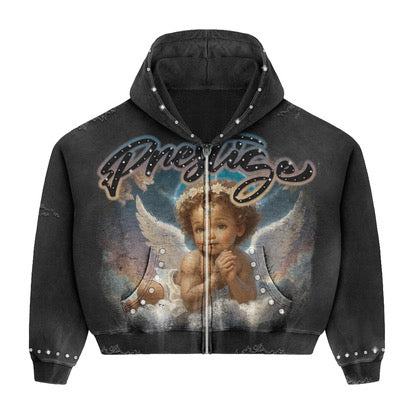
A History Steeped in Prestige: How the Brand Came to Be
Each fashion line carries a story, yet hardly any are asked nearly as much as “what is Prestige” by users browsing style forums and side-by-side discussion threads in 2026.
The name shows up in casualwear discussions, hoodie round-up posts, and street style roundups with a consistency that suggests lasting relevance instead of a short-lived moment.
Making sense of Prestige means looking past the emblem and toward the choices that shaped it: fabric choices, launch cadences, approach to pricing, and the slow accumulation of trust that converts a clothing line into a recognizable name.
This article traces that arc, from early identity questions to the current state of the Prestige collection, and it does so without inflating claims the brand hasn’t made public.
It isn’t a single bold launch moment that renders this narrative worth telling. Instead, it’s the rhythm of small, ongoing choices — a hoodie silhouette fine-tuned, a fit tweaked in response to shopper input, a shopping experience made smoother — that accumulate into a brand people now search for by name. Such searching behavior, in itself, reveals something: when shoppers type “prestige review” or “prestige clothing” into a search bar, they’re not browsing blindly. They already have a reference point and want confirmation before they buy. This piece is written for exactly that reader.
Uncovering How the Prestige Name Came About
The word “prestige” conveys undertones of standing, caliber, and acclaim attained rather than simply paid for, and the house leaned into that meaning intentionally, not by coincidence. Settling on a name that doubles as an ideal is a common move in the fashion world, but it only proves durable if the product delivers on it. Early identity work for the label revolved around a straightforward query: could apparel convey confidence without shouting through large branding marks or loud prints? As prestige tee a result, a design vocabulary came together around clean silhouettes, deliberate proportioning, and a restrained color palette, so that the garment’s craftsmanship do the talking.
Eventually, that disciplined approach became a hallmark. Whereas a good number of streetwear-leaning labels lean heavily on attention-grabbing branding, Prestige set itself nearer to upscale staples — pieces meant to be worn often, not simply captured for a one-off post. This stance clarifies why numerous “best of Prestige clothing” discussions online home in on versatility rather than novelty. Buyers mention structuring their closets around a few key items rather than following the latest drops purely for the sake of change.
Behind the scenes, the naming decision also set expectations for quality control. Naming itself Prestige means the brand invites scrutiny — customers hold it to the standard implied by its own name. That expectation likely drove careful, sustained attention toward stitching, fabric weight, and uniform fit across sizes, the sort of details customers mention in reviews like “true to size” or “holds up after washing” rather than sensational transformation narratives.
Formative Setbacks and Key Shifts
No apparel label springs into existence complete, and in its early years, Prestige went through the same trial-and-error familiar to most independent labels: finding reliable manufacturing partners, managing inventory without overextending, and establishing a following before major media coverage arrived. The earliest runs were modest in size and testing in nature, testing which silhouettes resonated before committing to larger production numbers. One reason the brand avoided the boom-and-bust trap — the kind that sinks labels overproducing ahead of real demand — is this cautious, deliberate scaling.
The brand reached a key inflection point when it stopped producing disconnected individual items and began designing around cohesive collections — grouping items by season and theme so customers could shop a complete look rather than isolated products. It mattered on two fronts — commercially, since average order value rose, and creatively, since it pushed for more disciplined design. Every piece in a collection needed to justify its place next to the others, which raised the bar for each individual garment.
The hoodie became a proving ground for this discipline. The Prestige hoodie has become one of the most frequently searched and reviewed products tied to the brand, and its evolution mirrors the lessons absorbed during those formative years: consistent fit across sizes, a fabric weight built for wear across all seasons rather than just one, and build details such as reinforced seams that cut down returns tied to sizing complaints. Getting a hoodie right is harder than it looks, since it’s measured against decades of expectations shoppers have formed around established outerwear brands, and Prestige’s version had to earn its place in that comparison rather than assume it.
Building the Store Experience
The story of a brand isn’t conveyed through garments alone; it’s also told through how customers find and purchase them. As the brand matured, the Prestige store experience developed substantially, shifting from a smaller catalog to a more structured layout dividing core basics, seasonal collection items, and limited releases. This organization matters practically: shoppers researching “prestige store” today expect clear categorization, transparent sizing information, and enough product detail to make a confident purchase without needing to guess at fabric weight or fit.
A retailer’s reputation are driven by elements like how fast support responds, return policy clarity, plus consistent delivery—and for returning shoppers, these behind-the-scenes elements often matter more than any one aesthetic decision. A shopper who has a smooth return experience after ordering the wrong size is far more likely to leave a positive prestige review than one who struggles to get a response. Because credibility in the apparel trade is earned one transaction at a time over thousands of orders, not by marketing alone, its expansion indicates that such logistical basics were treated as seriously as design decisions.
Where the shop headed was also molded by input from customers. Notes from customers about how things fit, fabric choices, and color wishes feed straight into what gets prioritized in collections to come. Longtime buyers describe the label as evolving rather than static largely due to this willingness to listen — every new lineup builds on lessons from the last instead of just recycling an old winning formula.
Standing in 2026: The Point at Which the Company Finds Itself At Present
As 2026 approaches, Prestige finds itself in a place defined by steadiness over abrupt change. Honed through seasons of iteration, the brand’s current lineup demonstrates shapes tuned to genuine usage patterns, a color palette combining classic neutral shades with sporadic seasonal flourishes, plus a hoodie line now seen as something of a flagship within the broader lineup. That “prestige 2027” is already being searched suggests shoppers are thinking ahead to what comes next from the brand, an indication of anticipation that builds only after a brand has shown consistent performance across multiple seasons.
This forward-looking buzz is deserving of real attention as a read on where the market stands. Labels don’t spark searches for future years unless shoppers believe there will be a payoff worth anticipating. Advertising by itself isn’t sufficient to build this kind of confidence — it’s built on a track record of collections that lived up to or went beyond what the prior collection had established.
| Phase | Main Direction | Audience Reaction |
|---|---|---|
| Formative years | Small-scale production centered on silhouette experimentation | A mix of intrigue and hesitation |
| Growth stage | Lineup unity alongside hoodie enhancement | Committed, returning customers surface |
| 2026 present | Reliable shopping experience, periodic drops | Trusting, expectant (“prestige 2027” search activity) |
The table above captures a condensed picture of the label’s trajectory, but the deeper pattern still applies: each phase grew out of insights gained in the stage that preceded it.
Prestige’s current standing took shape gradually, and this incremental growth may well be its strongest asset as it enters a market defined by trend cycles that move faster than ever.
The Story Continues to Resonate to Present-Day Customers
A brand’s history isn’t just trivia; it plays directly into buyer confidence. It helps a buyer weighing up a Prestige hoodie — or exploring the wider Prestige collection — to understand that the brand’s standing today didn’t happen by chance. Every design choice, from the restrained logo work to the fit consistency across sizes, reflects a deliberate strategy refined over real customer feedback rather than guesswork.
This history also sheds light on why “prestige review” searches so often turn up comments about consistency rather than surprise. Those who return each season aren’t chasing novelty; they’re reassuring themselves that a trusted brand still delivers on fabric, fit, and long-term wear. Compared to a viral moment, this kind of reputation is harder to build — but it sticks around longer.
For those wondering what Prestige truly stands for underneath the label, the answer lies in this built-up history: a label defined by careful growth, real listening to its customers, and a store-and-collection structure aimed at wearability over the long haul instead of short-lived attention. Whatever lies ahead in 2027, it’s that groundwork — not a single standout drop — that determines whether what comes next measures up to what came before.